
Wheel-end orders often go wrong quietly. A buyer asks for a bearing and seal kit, receives a low price, and only discovers at receiving that the quote omitted a spacer, locknut, hub cap, retaining hardware, or the second bearing position. The parts may all look related, but a wheel-end service set is a defined scope, not a loose group of items.
For distributor stock, workshops, and mixed-container buyers, the safest approach is to quote each component line by line before deciding whether to buy it as a kit. This article complements truck wheel hub RFQ guidance, wear-parts planning, and quotation comparison.
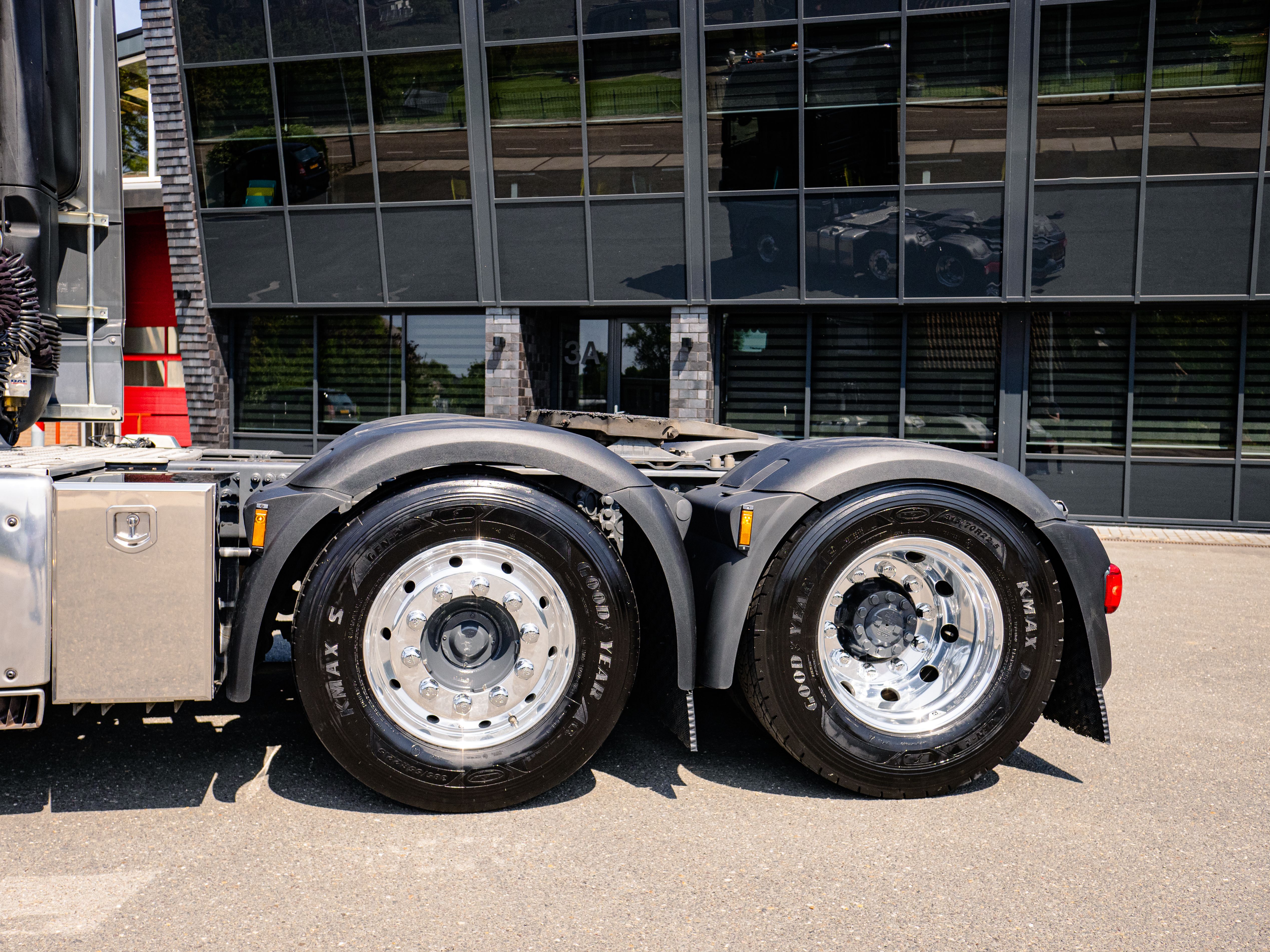
General repair context only. The photo does not identify a particular truck axle or repair kit.
Start with the axle and the service job
Do not start with the word “kit.” Start with the job. Is the order for a hub overhaul, one bearing replacement, a leaking seal, preventive replenishment, or a complete wheel-end service package? The answer changes the line list.
Record the axle or hub reference where available, wheel position, brake relationship, bearing markings, old seal number, hub-cap type, and whether the buyer needs one wheel-end or an axle set. A vehicle model can provide context, but it should not be the only matching input.
| RFQ input | What to send | Why it changes the quote |
|---|---|---|
| Axle or hub reference | Axle tag, hub casting mark, OE reference, or service record | Similar hubs can use different bearing and seal arrangements. |
| Wheel position | Steer, drive, trailer, inner/outer where relevant | Prevents a front-axle set being quoted for a different location. |
| Bearing marking | Clear photo of every number on cup and cone or bearing ring | Bearing designations encode type and dimensions. |
| Seal information | Old seal marking, OD/ID, width, and installation photo | A seal can look correct but have the wrong lip or housing size. |
| Scope | Bearing only, seal only, hub rebuild kit, or complete wheel-end set | Makes the supplier state what is actually included. |
SKF’s published bearing designation material is useful here: a basic designation identifies bearing type and size, while prefixes and suffixes can describe design features or components. In purchasing terms, copy the complete marking and photograph the packaging. Do not drop suffixes just because the first digits look familiar.
Build the kit line before you compare price
Many kits are sensible for stock control, but their contents vary by axle family and supplier. Ask for a bill of materials instead of accepting “complete kit” as an answer.
| Component | Ask the supplier to state | Typical omission to catch |
|---|---|---|
| Inner and outer bearing | Full marking, quantity, cup/cone or assembled unit | One bearing position quoted instead of both. |
| Hub seal | Reference, stated dimensions, lip or cassette style where known | A generic seal quoted without the required construction. |
| Spacer or retainer | Part number and quantity | Left out because it is treated as hardware. |
| Locknut / washer / locking device | Separate line and pack quantity | Different nut system assumed by each supplier. |
| Hub cap / gasket | Included, optional, or excluded | Buyer expects it but supplier prices bearing parts only. |
| Grease and installation items | Included or explicitly excluded | A service kit being compared with a dry-parts kit. |
The public Meritor Parts Xpress listing for one king-pin kit illustrates the same discipline: it lists a BOM with individual pins, caps, bushings, bearings, seals, gaskets, and hardware rather than relying on a kit name. Wheel-end RFQs need the same clarity.
Use a comparison sheet, not a single unit-price column
Normalise every quote before comparing. A lower kit price can be legitimate, but only after the buyer knows that the construction, quantities, packaging, and inspection basis are the same.
| Comparison point | Supplier A | Supplier B | Buyer decision |
|---|---|---|---|
| Bearing marking and quantity | Same type and both wheel-end positions? | ||
| Seal reference and construction | Same intended housing and running surface? | ||
| Hardware and cap scope | Included, optional, or excluded? | ||
| Kit packing | One kit per box or bulk-packed components? | ||
| Labels | Can warehouse staff identify every SKU at receiving? | ||
| Evidence | Sample photos, label photo, dimensional record, and batch information? |
If the buyer is replenishing multiple axle lines, keep each line separate even when one supplier can consolidate them. It is easier to approve five clear kit lines than to repair one vague “wheel-end parts” quotation after shipment.
The four errors that make a wheel-end quote unusable
The most common error is mixing a hub-body quotation with a service-kit quotation. They are both called wheel-end parts, but one may contain no bearings, seals, or hardware. Keep the hub body on a separate line even if the buyer eventually orders it with the kit.
The second error is recording a bearing number without showing which part it came from. Put a photo of the marking beside the line and identify whether it belongs to the inner or outer location. When cup and cone are supplied separately, record both markings.
Third, buyers often overlook the seal because it is inexpensive. A seal issue can hold up an otherwise complete repair. Keep the old seal reference, installation orientation photo, and any measured dimensions in the same folder as the bearing evidence.
Finally, do not permit substitutions to disappear into an email reply. If a supplier proposes an alternate, create a new comparison row. Record what changed, why it is proposed, and what evidence will be checked before approval.
Evidence pack before a supplier is approved
The first order does not need an elaborate dossier, but it should leave a traceable record. Ask for the information at the same point that you request the final quote.
| Evidence | First order | Repeat order |
|---|---|---|
| Quote tied to buyer line number | Required | Required |
| Label and packing photos | Required | Update if pack changes |
| Kit BOM | Required | Required when scope changes |
| Sample identification photos | Useful for fitment-sensitive lines | Keep approved reference on file |
| Pre-shipment quantity confirmation | Required for mixed order | Required when carton quantities change |
This record is modest, but it keeps the buyer from rebuilding the same evidence every time a line is reordered. It also makes a claim easier to discuss if a carton arrives with a missing seal bag or wrong kit label.
Check the received parts before they enter stock
Wheel-end parts can be damaged or mixed during packing. Check outer cartons first, then sample inner boxes against the approved line list. Photograph discrepancies before parts are installed.
General inspection context only. Actual acceptance should follow the approved RFQ, quotation, sample, and inspection plan.
At receiving, check:
- bearing marking and stated quantity;
- seal reference and obvious lip or casing damage;
- hardware count against the kit BOM;
- label, carton quantity, and mixed-SKU separation;
- corrosion protection and packaging that prevents ring-to-ring impact; and
- sample dimensions only against the approved reference or drawing.
This is not a substitute for correct installation. SKF notes that proper fitting with the right tools affects bearing service life. The buyer’s first task is narrower: make sure the delivered parts match the agreed scope before they disappear into inventory.
Decide when to buy a kit and when to buy loose lines
A kit helps when workshops repeatedly use the same defined service scope and the warehouse benefits from one labelled box. Loose lines may suit a distributor that sells bearings, seals, and hardware separately across more than one axle family. Neither method is automatically better.
| Buying method | Works best when | Control point |
|---|---|---|
| Complete service kit | A repeat repair needs the same components together | Approve the BOM and inner-pack count. |
| Bearing and seal lines | Customers order individual replacement items | Maintain separate reference and label records. |
| Mixed approach | Stock kit plus loose replacement components | Prevent the same part being counted twice in inventory. |
Choose the format based on sales and workshop use, then make the RFQ match it. Do not ask for a kit merely because it sounds more complete.
RFQ template for a wheel-end repair kit
A practical first-order sequence
First, send the line list, markings, and photos. Second, ask suppliers to return a component-level quote, not a headline kit price. Third, compare references, quantities, and exclusions. Fourth, resolve alternates in writing. Finally, agree what label, packing, and pre-shipment evidence will be checked.
That sequence works because it separates three decisions that are often mixed together: identifying the required service scope, choosing a supplier, and receiving the shipment. If a supplier cannot complete the first decision, price comparison is premature.
For repeat stock, save the approved kit BOM with the buyer line number. On the next order, ask the supplier to state whether anything has changed: reference, pack count, label, construction statement, or component list. A repeat order is faster when it begins with the last approved record rather than a new photo search.
One final control is destination packaging. A kit intended for local workshop use may be packed differently from distributor stock that will be handled through a container, warehouse, and resale channel. State whether labels must be readable on the master carton, whether each kit needs an individual box, and whether moisture protection is required for a long transit. Those details do not change the bearing reference, but they change whether the delivered stock remains usable.
If the order is split across suppliers, name the consolidation requirement early. The party receiving the cartons needs the supplier line number, carton count, and packing mark to remain visible. This gives the buyer a clean handover from quotation review to warehouse receiving, without turning a wheel-end kit into a generic mixed-parts carton.
Please quote the attached wheel-end service items for aftermarket distribution. Axle/hub reference: [ ]. Position: [steer/drive/trailer]. Required scope: [bearing and seal only / complete hub rebuild kit]. Bearing markings and seal photos are attached. Please list every component, quantity per kit, bearing reference, seal reference, packing quantity, label format, and any dimensions or axle information you need confirmed before quotation. Quantity: [ ]. Destination: [ ].
Before sending, make sure every line has an item number, quantity, photo, and a clear statement of whether you need a single wheel-end, axle set, or stock kit.
FAQ
Can a buyer quote wheel-end bearings from a photo alone?
Use a photo as a starting point. Add the complete marking, axle or hub reference, position, seal information, and quantity so the supplier can review a defined scope.
Are bearings and seals always sold as one kit?
No. Some suppliers quote them separately and others bundle them. Ask for a BOM and compare the same scope before comparing kit price.
Does a bearing number guarantee the correct wheel-end match?
It identifies a bearing reference, not the complete service job. The hub, seal, hardware, wheel position, and axle context still matter.
What should be checked before pre-shipment inspection?
Confirm the approved line list, component quantity per kit, label format, packing method, and the evidence required for bearing and seal identification.
Related articles
- Truck Wheel Hub: Structure, Function, and RFQ Checklist
- Commercial Vehicle Wear Parts and Replacement Cycles
- How to Compare Auto Parts Quotations from Chinese Suppliers
Sources and Notes
- SKF bearing maintenance handbook, for bearing designation concepts.
- Meritor Parts Xpress king-pin kit listing, as an example of an openly published service-kit bill of materials.
- Brand names, OE numbers, axle data, and cross references are inquiry-identification inputs. They do not by themselves confirm fitment or product approval.