CertiSpares / About

Why CertiSpares Exists

CertiSpares was built to handle commercial vehicle aftermarket RFQs with more structure: clearer matching, better supplier comparison, and steadier execution across light-, medium-, and heavy-duty trucks, with stronger depth in heavy-duty systems.

Sinotruk HOWOSinotrukSHACMANFotonDongfengFAW JiefangJAC

Why This Business Exists

These three themes explain the logic behind CertiSpares: why the market focus matters, why the supplier base matters, and why the workflow is built this way.

Commercial vehicle aftermarket focus
Market focus

Commercial vehicle aftermarket focus

The business is built around commercial vehicle aftermarket demand where RFQ clarity, repeat orders, and execution discipline matter.

Northern China sourcing relevance
Supplier base

Northern China sourcing relevance

Northern China matters because many heavy-duty and commercial vehicle parts clusters, factories, and supporting supply chains are concentrated there.

Structured sourcing and risk control
Approach

Structured sourcing and risk control

The sourcing model follows a clearer review logic across RFQ intake, supplier comparison, execution checkpoints, and documentation consistency.

Market Focus

The focus is commercial vehicle aftermarket sourcing because this is where buyers need more than supplier contact details. They need technical clarity, reliable execution, and a process that can hold up across repeat orders and mixed sourcing scenarios.

Why commercial vehicle aftermarket

The commercial vehicle aftermarket is where sourcing discipline has the most practical value: part matching is more technical, repeat demand matters more, and poor execution creates costly downstream problems.

Truck segment coverage

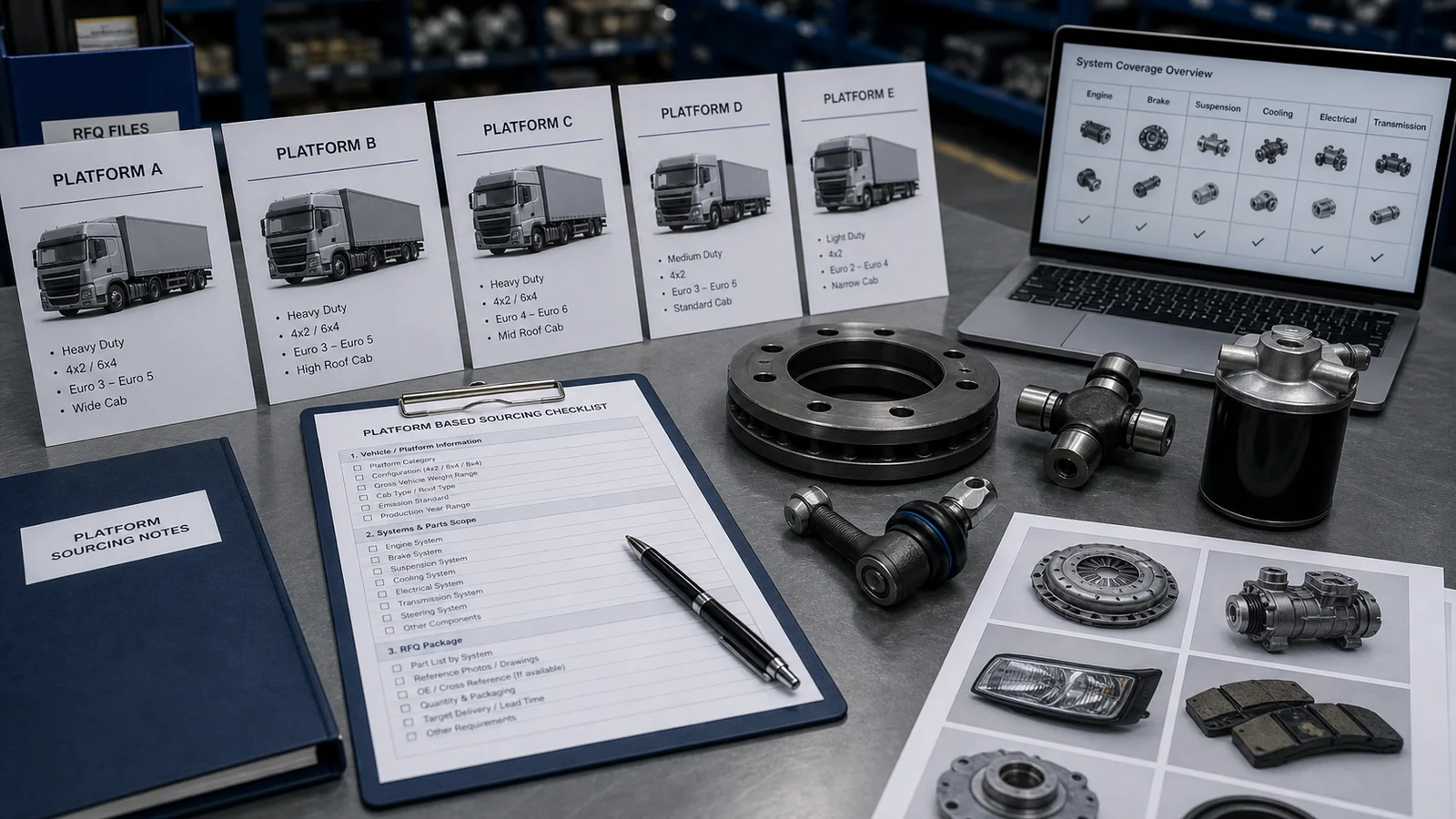
CertiSpares supports light-, medium-, and heavy-duty truck platforms, with stronger depth in heavy-duty systems where RFQs often require closer technical and supplier screening.

Why this approach exists

The company is built around structured sourcing, supplier comparison, and controllable execution rather than broad catalogue presentation or generic trading language.

How The Approach Works

The sourcing model is built to run logically from RFQ intake through supplier comparison and execution control, not as a loose series of quotations.

01

Supplier capability organization

Suppliers are organized by category, product fit, response quality, location, and execution feasibility before matching starts.

02

Inquiry structuring and product mapping

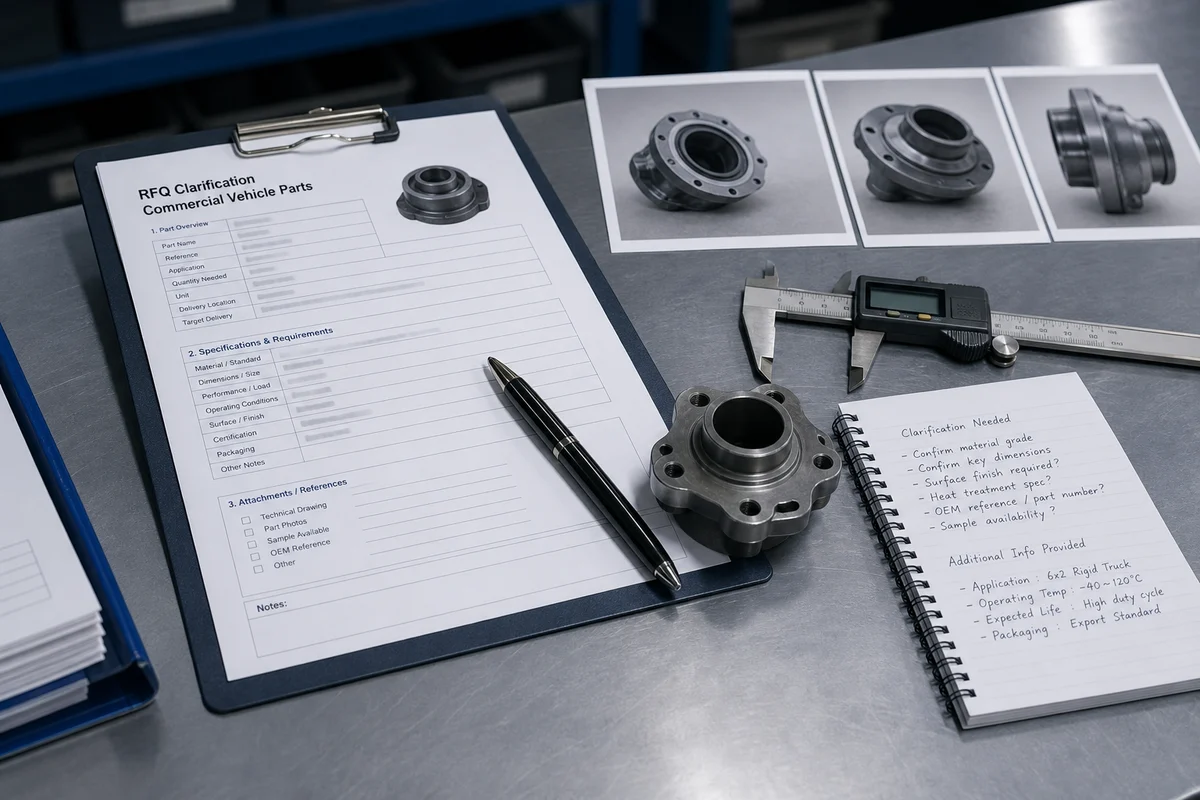
OEM numbers, product names, photos, vehicle references, and buyer notes are aligned to improve quotation clarity and reduce mismatch risk.

03

Quotation comparison

Supplier options can be compared on price, lead time, MOQ, packing, and supply stability, not price alone.

04

Execution after order confirmation

Once the order moves forward, we coordinate purchasing, production follow-up, packing checks, and shipment preparation.

05

Logistics and document consistency

Packing list, invoice data, labels, carton marks, and shipment-related files are checked for consistency to reduce avoidable issues.

06

Repeat-order support

A proven supply path becomes easier to repeat, standardize, and expand across future orders and mixed categories.

Why The Supplier Base Matters

Northern China matters because supplier access is not just about quantity. It affects category depth, response quality, and how efficiently RFQs can be screened and executed.

Why Northern China matters

Being closer to Northern China supplier clusters improves response speed, factory screening relevance, and sourcing depth in many heavy-duty and commercial vehicle categories.

Why heavy-duty runs deeper

Heavy-duty truck parts remain the stronger area because the supplier base, product familiarity, and workflow experience are deeper there, while light- and medium-duty support remains part of the sourcing scope.

Why process matters

A sourcing decision is only useful if it holds through quotation, production, packing, documents, and shipment. That is why the process is managed end to end.

Why buyers stay

The goal is to create a sourcing path that becomes easier to repeat, check, and expand over time instead of restarting from zero on each RFQ.

Founder mindset

The founder background is not presented as a story for its own sake. It matters because it explains why the sourcing model is process-driven, review-oriented, and careful about risk points.

Audit to sourcing mindset

The founder's audit background shaped a process-first way of working: review the facts, clarify the scope, compare options, and control the points where mistakes usually happen.

Control before assumption

That mindset carries into sourcing through requirement clarification, document checks, and quotation review before an order is pushed forward.

Built for credible execution

The aim is not to look bigger than reality. It is to run a sourcing model that stays clear, credible, and scalable as RFQ volume grows.

What We Support

Coverage includes light-, medium-, and heavy-duty truck platforms, with deeper experience in heavy-duty systems and practical support for mixed RFQ requirements.

Brake system

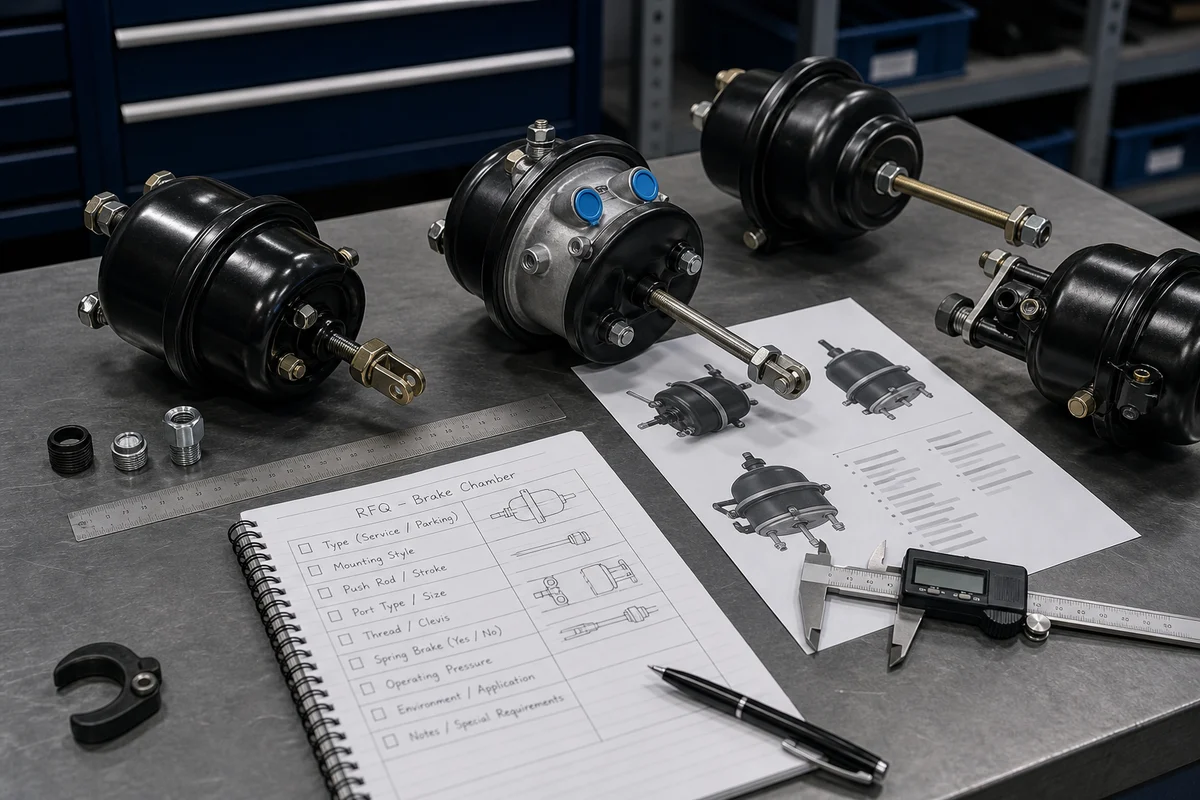
Brake pads, brake drums, calipers, chambers, valves, repair kits, and related aftermarket components depending on scope.

Chassis & suspension

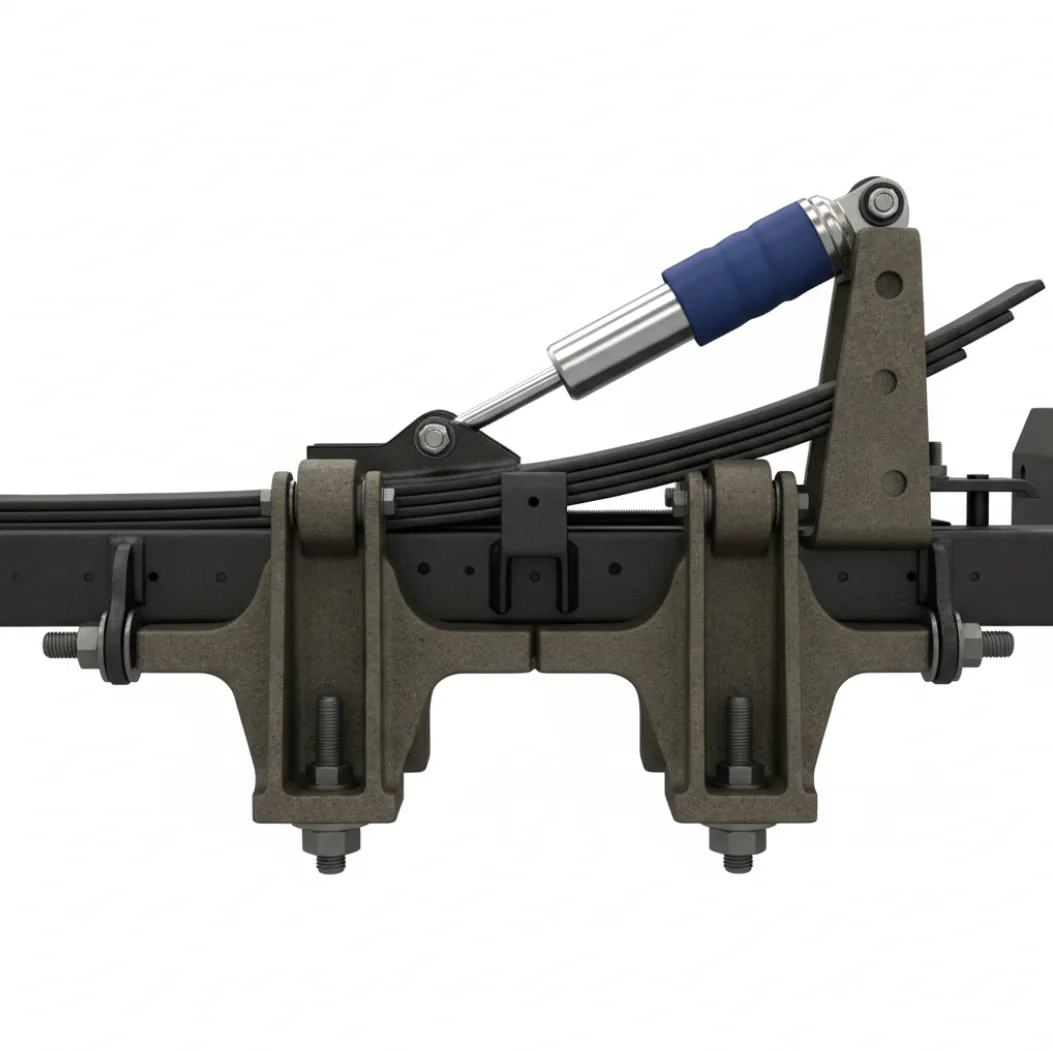
Torque rods, stabilizer parts, bushings, hub-related parts, bearings, suspension hardware, and related categories.

Steering / drivetrain

Selected steering and drivetrain-related aftermarket parts based on market demand and supplier capability.

Electrical / body / mixed SKUs

Lights, mirrors, wiring consumables, and selected body or electrical items where consolidation matters.

Need a clearer starting point?

Send your OE numbers, part list, or product photos. We can structure the RFQ and suggest a sourcing path that fits the order scope and truck platform.

Who We Work With

The model is best suited to buyers who value process clarity, supply stability, and repeatable execution more than broad marketing claims.

Distributors

Buyers looking for stable commercial vehicle parts supply with clearer execution and repeat-order potential.

Aftermarket wholesalers

Importers managing mixed categories who need cleaner quotation handling and consolidation support.

Fleet-related buyers

Buyers who value fitment clarity, delivery predictability, and fewer after-sales disputes.

Growth-stage importers

Companies that need sourcing structure and execution discipline, not just scattered supplier quotes.

How We Think

The underlying logic is simple: clarify the RFQ, compare with discipline, control key risk points, and make the sourcing path easier to repeat.

Clarity
Clear inputs lead to clearer execution

We standardize RFQ inputs before quotation and order execution begin.

Evidence
QC evidence before shipment

Photo/video records, packing checks, and label verification help reduce avoidable disputes.

Trace
Traceability in documentation

PI / CI / PL consistency and carton mark alignment improve customs and payment flow.

Repeat
Built for repeat orders

We optimize around stable suppliers, repeatable workflow, and scalable execution.

FAQ

Quick answers for buyers evaluating a commercial vehicle aftermarket sourcing partner in China.

Do you need OEM / part numbers?

OEM or part numbers are ideal, but photos, dimensions, vehicle references, and usage scenarios can also help us structure the inquiry.

Can you support mixed-SKU orders?

Yes. Mixed-SKU consolidation is one of the areas where a structured sourcing workflow becomes especially useful.

Do you only work with one supplier?

Not necessarily. Depending on the order, we may compare multiple supplier options for stability, price, lead time, and packaging suitability.

What kind of buyers do you usually support?

Typically distributors, importers, wholesalers, and fleet-related buyers who value stable supply and cleaner execution.