
A truck bushing can be one of the smallest lines in an RFQ and still create the biggest argument after delivery. The old part may look ordinary: rubber around a metal sleeve, pressed into an eye, bracket, torque rod, stabilizer mount, cab mount, or spring assembly. But a quotation can go wrong when two suppliers have priced different widths, sleeve lengths, flange shapes, rubber constructions, or kit contents under the same loose description.
That is why a request for “truck bushing” is rarely enough. A useful RFQ starts with the part’s installed position and reference, then adds photos, measurable dimensions, quantity, and the scope the buyer expects. The information does not prove fitment by itself. It gives the supplier a workable basis to review and quote the same item.
This guide sits alongside commercial vehicle wear-parts planning, rubber and bushing parts sourcing, and suspension parts sourcing. For a live mixed order, keep bushings as their own RFQ lines rather than hiding them inside a general suspension request.
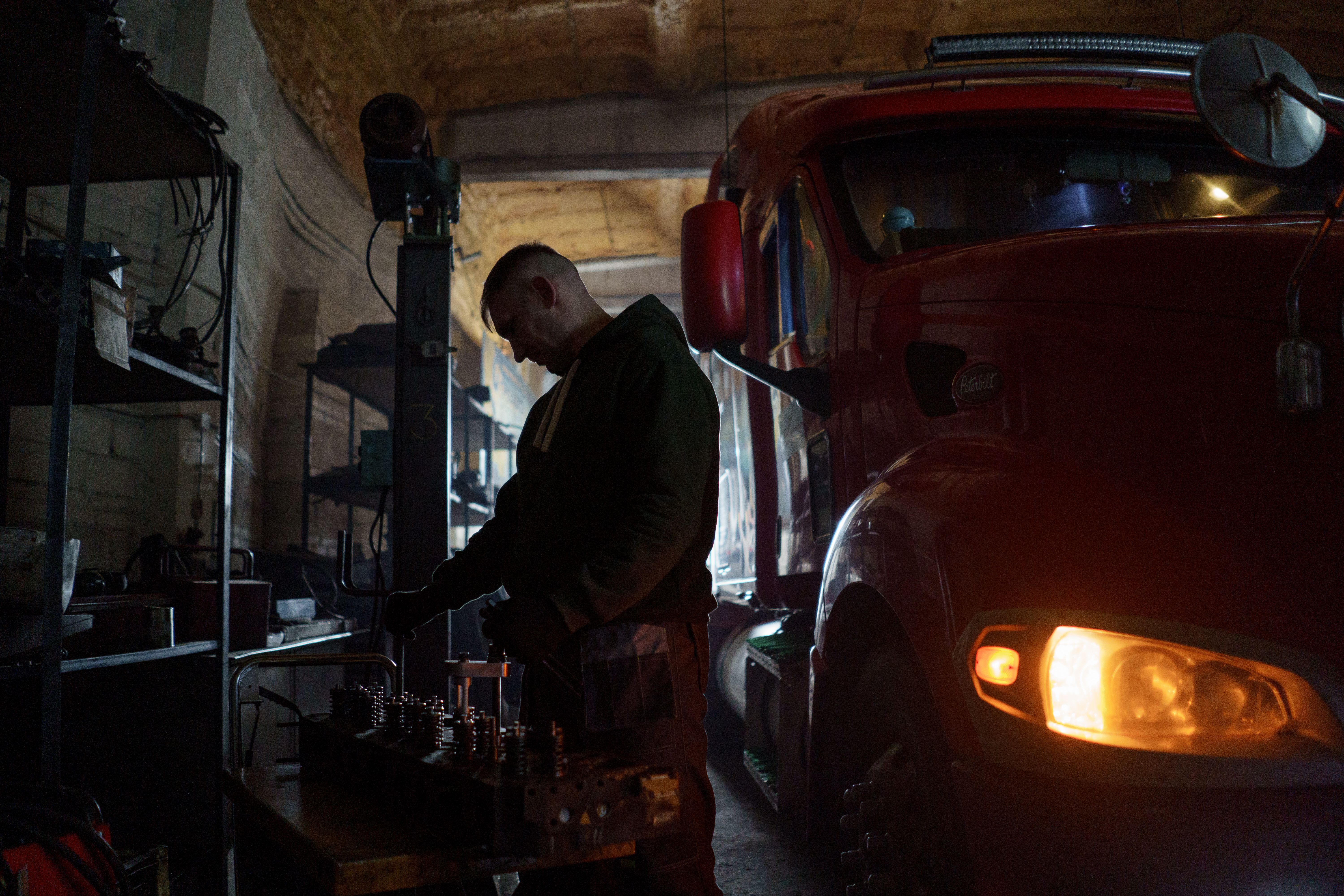
A workshop photo sets the context: the image is illustrative only and does not identify a specific bushing, vehicle, or repair procedure.
Why bushings create repeat-order mistakes
Bushings isolate movement, control alignment, and reduce metal-to-metal contact in many commercial-vehicle systems. The exact job depends on the assembly. A torque rod bushing, for example, has different loading and construction questions from a stabilizer-bar mount or a cab-mount bushing.
The first problem is naming. Buyers and suppliers may use “bush”, “bushing”, “silent block”, “rubber mount”, or a local description for different designs. The second problem is scope. One quote may be for a rubber-metal bushing only; another may include the outer shell, inner sleeve, washers, brackets, or a complete arm or rod assembly.
The third problem is that close dimensions are not the same as an approved match. A few millimetres, a different sleeve projection, or a different flange can affect pressing, bracket location, and service behaviour. Treat measurements as controlled inquiry data, not as a shortcut around technical confirmation.
For related assemblies, see torque rods in commercial vehicles and stabilizer bars in heavy trucks. Those articles explain the surrounding system; this one focuses on getting a bushing quotation into a comparable state.
Identify the part before taking measurements
Start by recording where the part came from. “Front suspension bushing” is still too broad. A buyer or workshop should note the axle or vehicle position, the parent assembly, whether the part is left/right or front/rear specific, and whether the old part was removed from a rod, arm, mount, hanger, or bracket.
Use this first-pass record:
| RFQ field | What to provide | Why it matters |
|---|---|---|
| Part reference | OE number, supplier number, casting mark, or old label if available | Gives the supplier a starting point for its own catalogue review. |
| Installed position | Vehicle, axle, front/rear, left/right, and parent assembly | Similar parts may sit in different positions. |
| Photos | Front, side, sleeve opening, marking, and the surrounding assembly if possible | Shows flange shape, sleeve projection, cracks, and construction clues. |
| Required scope | Bushing only, bushing with sleeve, complete rod/arm, or service kit | Stops suppliers from quoting different packages. |
| Quantity | Quantity per SKU and whether it is trial, replenishment, or project demand | Lets the supplier quote a consistent packing and MOQ basis. |
If an old part is badly damaged, photograph both the part and the receiving bore or assembly. A photo of the location can be more useful than a clean product photo with no scale.
Measure the bushing in a repeatable way
Measure the old part with a caliper where practical, record units, and label every photo to the same RFQ line. Do not rely on a tape measure stretched across rubber if a more precise tool is available. If the part is still pressed into an assembly, say so. Suppliers need to know whether a dimension came from the loose part, the housing, or a drawing.
| Measurement or detail | How to describe it in the RFQ | Common quotation error it prevents |
|---|---|---|
| Inner diameter (ID) | Sleeve bore in mm; add a photo through the bore | A sleeve that will not accept the intended bolt or pin. |
| Outer diameter (OD) | Rubber or outer-shell diameter, with the measuring point stated | A part that cannot be pressed into the receiving eye or bracket. |
| Overall width | Total width including flanges where relevant | A bushing that sits proud of or short of the mounting faces. |
| Sleeve length and projection | Length of the inner sleeve and any amount extending beyond rubber | Incorrect clamp load or washer arrangement. |
| Flange shape and diameter | One flange, two flanges, stepped profile, or no flange | A part that looks similar from the side but cannot seat correctly. |
| Rubber and metal condition | Cracking, separation, corrosion, loose sleeve, or distortion | A request that copies a failed construction without reviewing why it failed. |
One number is rarely enough. A supplier may have several parts with the same ID but different OD, width, flange, or sleeve geometry. Mark the unit as mm, attach a simple sketch if necessary, and separate each size into its own line. Do not combine “assorted bushings” under one quantity.
Rubber, sleeves, and assembly scope all affect the quote
Rubber-metal parts are assemblies. The visible rubber is only one part of the question. A buyer may need to ask whether the item has an inner sleeve, outer shell, bonded rubber-metal construction, a voided rubber profile, or a separate sleeve supplied in the bag. None of these details is cosmetic when quotations are being compared.
Rubber material and hardness can matter, but a hardness number alone is not a complete purchasing specification. ASTM D2000 is a classification system for vulcanized rubber materials used in automotive applications. Its published scope notes that a buyer and supplier may need to establish the applicable properties, test methods, and limits when an application’s requirements are more specific than the classification alone can describe. That is a useful purchasing lesson: state the service context and supplier evidence needed; do not treat a single Shore number as a universal approval.
Ask practical questions instead:
- Is the quote for a rubber-metal bushing or a loose rubber insert?
- Is the inner sleeve included and what is its stated length?
- Does the outer shell come installed, supplied separately, or not supplied?
- Is the old part’s flange, groove, locating lip, or void pattern replicated in the quoted construction?
- Does the supplier have a drawing, sample comparison, or measurement sheet for the quoted reference?
Where oil, heat, road contamination, or high load is relevant, put that condition into the RFQ. It is more useful than asking a supplier to describe a part as “high quality.” ASTM’s public summary of D2000 groups rubber material requirements around factors such as heat aging and fluid swelling; the exact requirement still belongs in the product-specific specification.
Compare the quotation line by line
The cheapest bushing quote may be for the smallest scope. Before comparing price, normalize the lines. Ask every supplier to answer the same questions and enter the result in a comparison sheet.
| Comparison point | Supplier A | Supplier B | What the buyer should resolve |
|---|---|---|---|
| Reference and position | Is the quoted item for the same installed location? | ||
| ID / OD / width | Are the measurement units and reference points clear? | ||
| Sleeve and shell | What metal parts are included? | ||
| Construction | Bonded, separate insert, flange type, and any stated material information. | ||
| Kit contents | Bushings per set, washers, bolts, sleeves, or complete assembly. | ||
| Packing and labels | Individual labels, inner boxes, master-carton quantity, and marks. | ||
| Inspection evidence | Sample photos, dimensional record, batch identification, or agreed checks. |
The same approach applies when a bushing appears in a supplier quotation comparison. A supplier can be asked to clarify a line. It should not be asked to guarantee a vehicle match from a generic name or a single photo.
Check incoming parts before they disappear into stock
Bushings are easy to receive badly because cartons can contain many near-identical references. Define the checking method before shipment, especially for distributor stock or mixed containers.
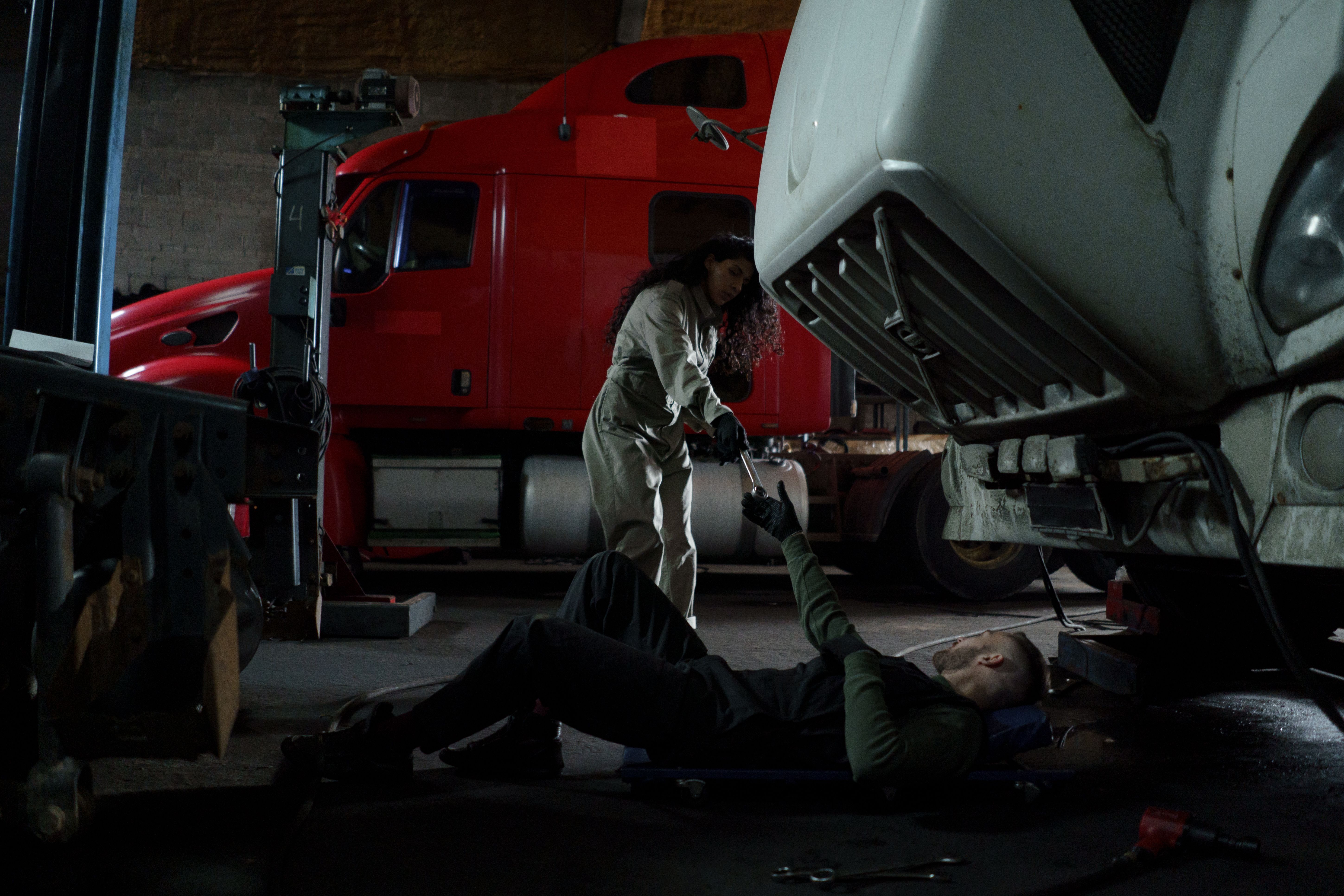
This is a general maintenance image. Use the approved sample, RFQ line, and inspection basis to identify the actual parts in an order.
At minimum, agree how the buyer will check:
- SKU label against the RFQ line and packing list;
- quantity per inner box and carton;
- visible rubber damage, tears, flash, cracks, or separation;
- sleeve presence, obvious corrosion, and sleeve projection;
- sample ID, OD, and width against the approved quotation or drawing;
- packing protection so metal sleeves do not mark adjacent rubber parts; and
- batch or production identification where the order requires traceability.
Inspection should be proportionate. A small replenishment order may need photo confirmation and sample measurement. A large order or a safety-sensitive application may justify a more formal inspection plan. In either case, put the acceptance basis in writing before the shipment leaves, not after a workshop has installed the parts.
A practical bushing RFQ template
Use one line per distinct item. Replace the brackets with the information you have, and state what is unknown rather than guessing.
Please quote the following commercial vehicle bushings for aftermarket distribution. Item 1: [OE/reference if available]. Installed position: [vehicle/axle/front-rear/assembly]. Required scope: [bushing only / bushing with sleeve / complete assembly]. Measurements from old part: ID [ ] mm, OD [ ] mm, overall width [ ] mm, sleeve length [ ] mm, flange detail [ ]. Photos attached: [yes/no]. Quantity: [ ]. Please state quoted construction, parts included per set, packing quantity, labels, and any dimensions you need us to confirm before quotation. Destination: [ ].
Before sending it, check this list:
| Confirm before RFQ | Done? |
|---|---|
| Each bushing has its own line number and quantity | |
| The installed position and parent assembly are stated | |
| Photos show both faces, the sleeve, and markings | |
| ID, OD, width, sleeve length, and flange details are recorded where measurable | |
| The buyer has said whether it needs a bushing, kit, or complete assembly | |
| Packing and labelling expectations are included for stock orders |
If you have a mixed list of rubber parts, send the spreadsheet, old-part references, photos, and quantities through Contact. CertiSpares can help turn the list into a clearer RFQ before quotations are compared.
FAQ
Are inner and outer diameter enough to quote a truck bushing?
Usually not. Add width, sleeve length, flange or profile details, installed position, photos, required scope, and any reference number. Similar IDs and ODs can still belong to different assemblies.
Should a buyer specify rubber hardness in every RFQ?
Only when there is a product-specific requirement or evidence to support it. State the application conditions and request the supplier’s construction details or specification basis. Hardness alone does not establish that the entire assembly is suitable.
Can an OE number confirm exact fitment?
Use an OE number as an inquiry reference, not as an automatic fitment promise. A supplier still needs to review the quoted scope, drawings, photos, dimensions, and application information.
Is it better to buy the complete torque rod or the bushing only?
That depends on the repair method, inventory plan, tools available, and the condition of the surrounding assembly. Quote the two scopes separately when the buyer needs to compare them.
Related articles
- Commercial Vehicle Wear Parts and Replacement Cycles
- Torque Rods in Commercial Vehicles: What Buyers Should Know
- Stabilizer Bars in Heavy Trucks: Structure and Purpose
- How to Compare Auto Parts Quotations from Chinese Suppliers
Sources and Notes
- ASTM D2000, Standard Classification System for Rubber Products in Automotive Applications. The public scope describes classification by material properties and notes when purchaser-supplier agreement is needed for more specific product requirements.
- ASTM on developing rubber compounds with D2000. This overview explains that D2000 covers properties including hardness, tensile strength, elongation, heat conditions, and fluid conditions.
- SuperPro catalogue. The catalogue includes bushing listings where bar diameter or other dimensions must be measured and kit contents are specified.
- Brand names, vehicle models, OE numbers, and cross references are used only to identify inquiry scope. They do not by themselves confirm fitment, authorization, stock, or performance.