
A king-pin kit quotation can look complete while omitting the part that stops the repair. Some kits include pins, bushings, thrust bearings, seals, caps, draw keys, and hardware. Others quote only the pins and bushings. The buyer cannot compare the prices honestly until the contents, axle context, and dimensions are put on the same page.
This is a procurement guide, not an installation manual. It helps buyers prepare a clearer inquiry for distributor stock or a repair programme. For wheel-end context, read truck wheel hub RFQ guidance; for general quotation control, see how to compare supplier quotations.
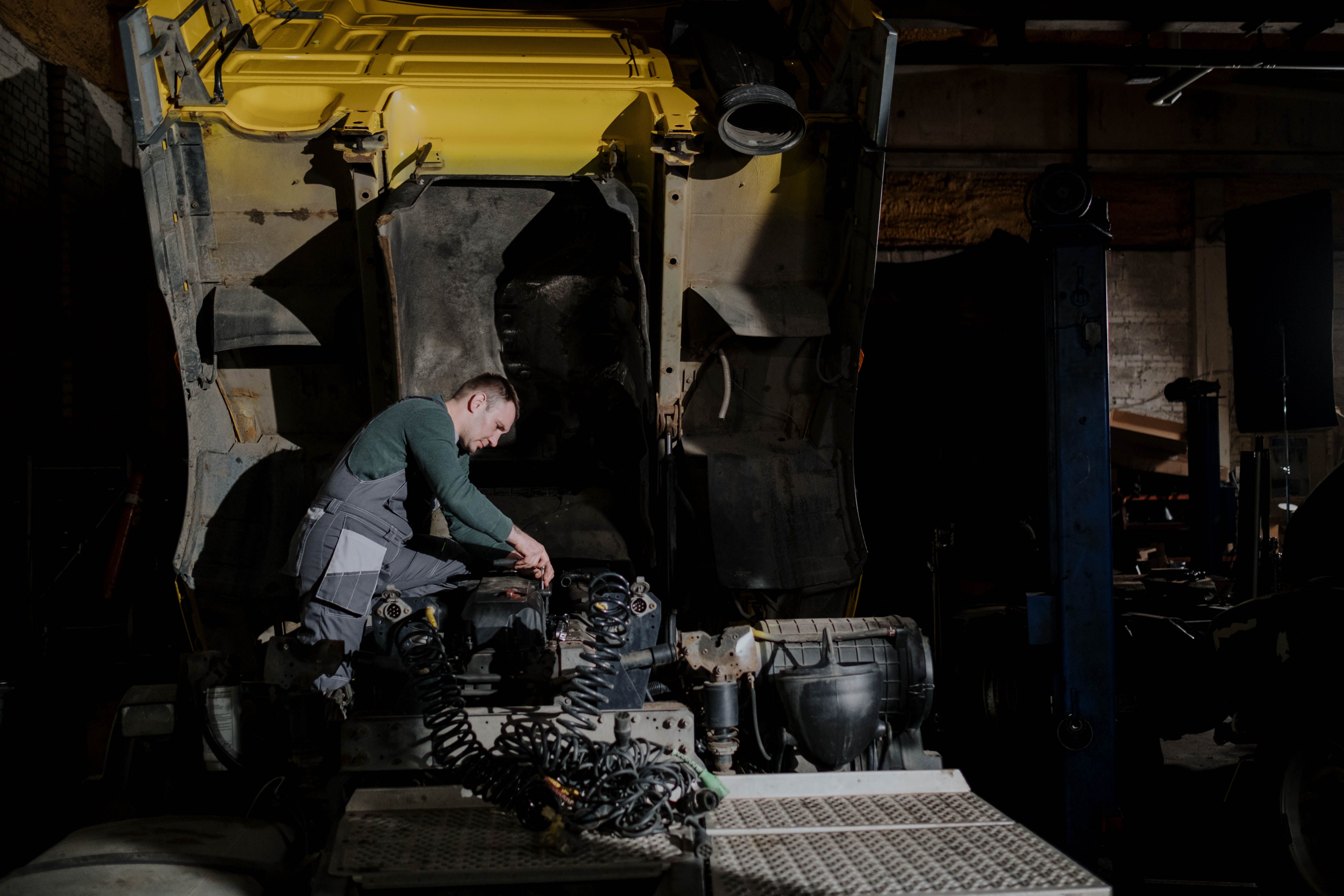
General repair context only. The image does not show a particular steering axle, pin, or kit.
Start with the axle, not the kit name
The axle model or tag is the most useful starting point when it is available. Record the truck and axle context, but also collect the old pin, markings, photos, and measured dimensions. A king pin can share one diameter with another part yet differ in length, draw-key arrangement, bushing construction, bearing dimensions, or hardware.
| Input | What to send | Why it matters |
|---|---|---|
| Axle reference | Axle tag, OE reference, or old service record | Narrows the supplier search without guaranteeing a match. |
| Old pin data | Length, diameter, keyway/draw-key details, markings, and photos | Separates similar pins in a catalogue. |
| Bushing information | Quantity, reamable or stated construction, OD/ID where measurable | A kit can use different bushing types. |
| Bearing and seal data | Markings, dimensions, and quantity | Stops a pin-and-bushing quote being mistaken for a complete kit. |
| Required scope | One side, axle set, pins only, or service kit | Makes packing and total quantities comparable. |
Meritor’s public listing for an active king-pin kit shows why the scope must be stated. It publishes a 23.45 lb unit pack with a 10.392-inch double-draw-key pin, composite bushings, bearing dimensions, plus a BOM containing pins, bearing assemblies, caps, bushings, hardware, gaskets, and seals. That is one published kit, not a universal configuration. It does show how much information can sit behind the phrase “king pin kit.”
Measure and photograph the old parts
Use calipers for pin diameter and length where practical. Photograph the complete pin, each end, draw-key or keyway area, bushings, bearings, seals, and the axle location. Put a ruler or caliper reading in the photo when possible.
| Detail | Record in the RFQ | Mistake it helps avoid |
|---|---|---|
| Pin diameter | Measured diameter and measuring point | Same axle family but different pin series. |
| Overall length | Total length and any stepped sections | Pin enters the wrong bore depth. |
| Keyway / draw-key | Photo and geometry description | Different locking arrangement. |
| Bushing type | Quantity, ID/OD, material or ream requirement if known | Wrong service process or bushing scope. |
| Bearing | ID, OD, width, marking, and quantity | Missing thrust-bearing or wrong bearing size. |
| Seals and hardware | Individual count and image | Small components omitted from a low quote. |
Measurements are inquiry data. They help a supplier check scope, but they do not turn a generic part into an approved fitment. Where the buyer has an axle drawing or existing approved sample, include it in the RFQ instead of relying on dimensions alone.
Make the bill of materials non-negotiable
Ask every supplier for a BOM, then compare the same columns. If the supplier cannot state its kit contents, do not compare the kit price with a detailed offer.
| BOM line | Supplier A | Supplier B | Buyer check |
|---|---|---|---|
| King pins | Quantity, length, diameter, and locking type stated? | ||
| Bushings | Quantity and construction stated? | ||
| Bearings | Thrust or other bearing type and quantity stated? | ||
| Seals / gaskets | Included individually or not? | ||
| Caps / draw keys / hardware | Pack count and kit scope stated? | ||
| Packaging | One service kit per box, label, and protection? |
The quotation should also state whether the kit is intended as a pair, one axle, or one side. That wording affects both the price and the quantity the warehouse expects to receive.
Four questions to ask before approving a kit
Ask whether the offered kit is intended for one steering knuckle, one axle, or another stated service scope. Ask whether bushings need reaming or other preparation, if the supplier has provided that construction detail. Ask how the kit’s small components are packaged. Finally, ask whether the axle tag or old-part information leaves any remaining question before the buyer issues a purchase order.
These questions do not turn a sourcing service into a technical approval service. They force the quotation to show its limits. A clear “requires axle confirmation” is more useful than a confident-looking kit price built on an assumption.
| Approval question | Answer to record |
|---|---|
| What service scope does one kit cover? | One side, axle, or explicitly stated alternative. |
| What is inside the box? | Complete BOM and counts. |
| Which items are loose inside the kit? | Bags, hardware, seals, bearings, or caps. |
| What remains unconfirmed? | Axle tag, drawing, old-part measurement, or sample review. |
Keep a first-order sample record
For a new supplier or new reference, retain one labelled sample set or a complete photo record. Capture the outer carton, inner label, all components laid out by BOM line, pin markings, and any dimensional check agreed at quotation stage. This is useful for future reorders and for claims; it is not a substitute for vehicle-specific installation instructions.
When a buyer changes from a complete kit to pins-only or bushing-only replenishment, start a new line rather than reusing the old kit price. The contents have changed, so the comparison basis has changed too.
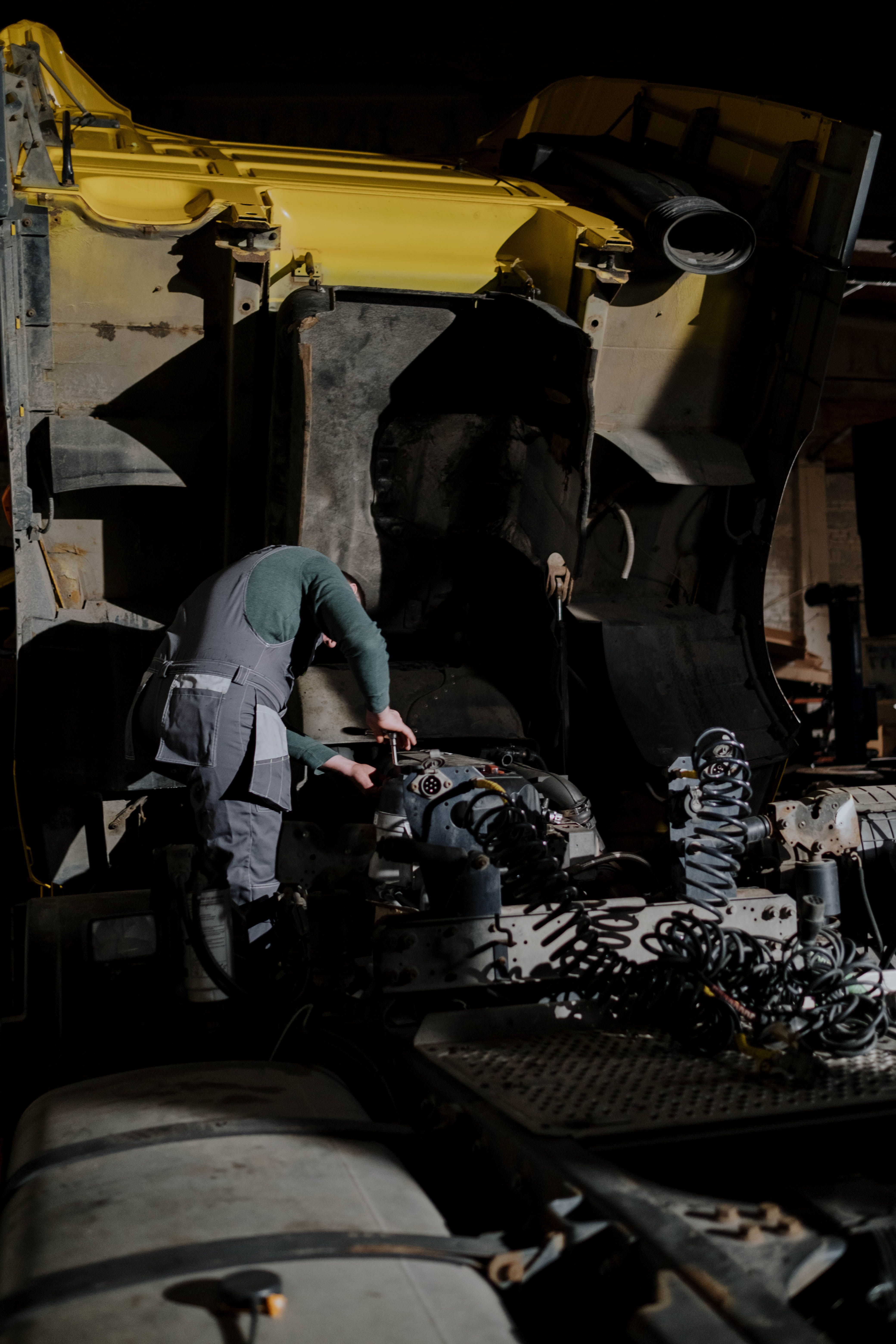
General workshop context only. Inspect actual kit labels, contents, and sample measurements against the approved quotation.
Receiving and inspection checks
King-pin kits contain hard parts that can knock against each other in transit. Packaging matters because an unlabelled bag of seals or hardware is easy to lose before installation.
- Confirm kit label, buyer line number, and quantity per box.
- Count pins, bushings, bearings, seals, caps, draw keys, and hardware against the BOM.
- Check pin surfaces, keyway areas, threads, and bearing surfaces for obvious corrosion or impact damage.
- Confirm the supplier’s stated dimensional record or sample checks where agreed.
- Keep all small components with their parent kit until the receiving record is complete.
Do not turn a source-backed article into an unsupported claim about service life. Installation method, axle condition, lubrication, alignment, load, and maintenance affect the result. The buying task is to obtain the parts that were actually quoted and to preserve evidence if the scope is wrong.
Use the kit weight and pack data as a receiving check
Published catalogue data can give buyers a useful sense check without replacing a BOM. Meritor’s example kit lists a 23.45 lb unit-pack weight and a pallet quantity of 140. A buyer should not assume that another kit has the same numbers. But when a supplier provides unit-pack and carton data for the offered reference, the warehouse can compare those data with the shipment and investigate a clearly inconsistent carton before distribution.
| Receiving record | Why it helps |
|---|---|
| Unit-pack weight stated by supplier | Flags an obviously incomplete or mixed carton. |
| Carton quantity | Supports count planning for distributor stock. |
| Inner-bag layout | Helps locate seals and hardware before installation. |
| Label photo before shipment | Lets the buyer compare delivered reference to approval. |
Use public sources as an index, then return to the actual kit
A public manufacturer page, catalogue, or repair discussion can be helpful when a buyer needs the right vocabulary. It may show that a king-pin service kit can include pins, bushings, bearings, seals, caps, and draw keys. It cannot approve the contents of the buyer’s own order.
Use the public source to form a checklist, then ask the supplier for its own BOM, label photo, and line-specific information. This keeps an article useful without pretending that a catalogue reference proves a different supplier’s kit.
King pin kit RFQ template
A practical first-order sequence
Send axle evidence and old-part data first. Ask suppliers to return a kit BOM and list any point they cannot confirm. Compare the offers on kit scope before price. Approve a sample record or documentary evidence for the first order, then ask for label and packing photos before shipment.
For repeat orders, keep the approved BOM alongside the buyer line number. If a supplier changes the kit contents, label, pack quantity, bushing construction, or reference, treat it as a controlled change. Do not assume the new carton is equivalent because the kit name looks familiar.
Separate repair information from catalogue language
Catalogues often use short descriptions because their reader already knows the axle family. An RFQ needs more context. A line that says “king pin kit” may be enough for an internal warehouse shorthand, but it is not enough for a new supplier comparison.
Write the buyer’s actual need in full: axle data if known, scope per side or axle, old-pin information, required kit components, quantity, packing, and destination. Then allow the supplier to tell you what is missing. This is more reliable than forcing an exact-looking reference from a partial vehicle description.
Make change control visible on repeat orders
Repeat orders are where silent substitutions appear. Put an “unchanged / changed / clarification needed” field beside each repeat line. If a reference or pack changes, ask why and save the response with the new approval record.
| Repeat-order field | What to compare |
|---|---|
| Reference | Same full marking or stated alternate? |
| BOM | Same count of pins, bushings, bearings, seals, and hardware? |
| Packing | Same unit-pack and label format? |
| Evidence | New photo or inspection record needed? |
The goal is not paperwork for its own sake. It is to keep a well-performing repeat line from drifting into a different product under the same familiar description.
Please quote the attached truck king pin kit requirement for [distributor stock / workshop repair]. Axle reference: [ ]. Required scope: [one side / axle set / pins only / complete kit]. Old-pin data: diameter [ ] mm, length [ ] mm, keyway or draw-key photos attached. Please provide a complete bill of materials, quantity per kit, bushing and bearing details, seals and hardware included, packing method, label format, and any axle information required before quotation. Quantity: [ ]. Destination: [ ].
FAQ
Is the truck model enough to quote a king pin kit?
No. Add axle data, old-pin photos, measurements, lock detail, required kit scope, and quantities. The truck model is context, not a final match.
Are all king pin kits supplied with bearings and seals?
No. Kit contents differ. Ask for the BOM and compare it line by line.
Why does draw-key information matter?
It is part of the pin retention arrangement. A pin can have similar dimensions but a different locking configuration.
Should a buyer quote one side or a full axle set?
State the required repair scope explicitly. Suppliers may price one side, a pair, or a kit with a different quantity basis.
Related articles
- Truck Wheel Hub: Structure, Function, and RFQ Checklist
- Commercial Vehicle Wear Parts and Replacement Cycles
- How to Compare Auto Parts Quotations from Chinese Suppliers
Sources and Notes
- Meritor Parts Xpress king-pin kit listing, for one publicly published kit’s dimensions, pack information, and bill of materials.
- Meritor king-pin selector, which requests the full axle-model number as shown on the tag.
- Axle data, OE numbers, photos, and dimensions identify inquiry scope. They do not by themselves confirm fitment, stock, or authorization.