
For many commercial vehicle parts buyers, sourcing is usually discussed in terms of price, supplier reliability, and lead time.
Those factors matter, but they do not tell the whole story. A large part of purchasing efficiency is decided before shipment, when the order is being structured. A buyer may negotiate acceptable unit prices and still get a weak commercial result if the cargo mix is wrong, the container is underused, or too much capital is tied up in slow-moving stock.
This is especially common in the aftermarket, where demand is spread across multiple SKUs rather than concentrated in one product line. Importers and distributors often need a practical mix of brake parts, suspension parts, wheel-end items, drivetrain components, and maintenance-related service parts. What they do not always need is one full container of only one category.
This article is the bridge between our broader commercial vehicle parts sourcing from China positioning and the more detailed truck parts sourcing service. If you want the workflow behind RFQ handling, supplier comparison, and shipment execution, continue into how the process works.
If a buyer sources vertically from one supplier at a time, the container often becomes difficult to optimize. If the order volume is too small, freight economics are weak. If the buyer increases quantities only to fill the container, inventory can become unbalanced. The shipment looks efficient on paper, but stock turnover suffers after arrival.
This is where container consolidation and balanced multi-SKU sourcing become commercially important. Instead of treating sourcing as a sequence of isolated factory orders, buyers can treat it as one coordinated inventory and logistics decision. In practice, that usually requires supplier comparison, quotation alignment, QC checkpoints, and delivery coordination to work together rather than separately.
Benchmark Snapshot
The commercial argument becomes easier to understand when the freight effect and the inventory effect are separated and quantified.
The benchmark view below uses two different data types:
- an indicative freight model built from public April 2026 lane references and a normalized 20GP volume assumption
- an illustrative distributor model comparing concentrated buying with a balanced multi-SKU replenishment pattern
These are not promises for every buyer or every lane. They are practical benchmark views that show why the sourcing model matters.
Table 1: Indicative Freight Cost per CBM by Market and Loading Level
| Market | 20GP FCL midpoint (USD, est.) | LCL reference (USD/CBM) | FCL USD/CBM @ 50% load | FCL USD/CBM @ 100% load |
|---|---|---|---|---|
| Thailand | 362.5 | 5 | 21.84 | 10.92 |
| Egypt | 3350.0 | 105 | 201.81 | 100.90 |
| Netherlands | 1965.5 | 35 | 118.40 | 59.20 |
| USA | 2060.0 | 110 | 124.10 | 62.05 |
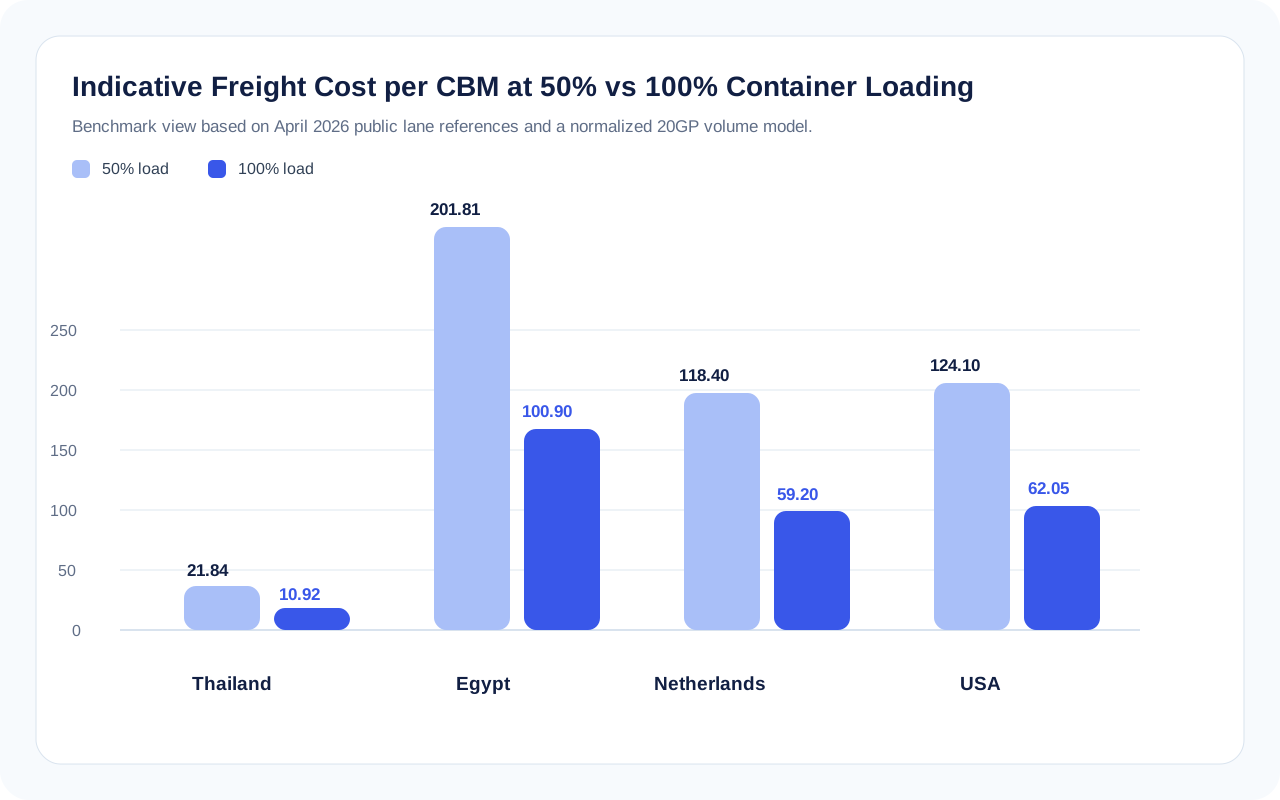
This is the cleanest way to show the freight logic. If the container cost is largely a per-box cost pool, then better loading sharply reduces the implied freight cost carried by each CBM. The move from 50% loading to 100% loading roughly halves the implied freight cost per CBM in the benchmark model.
The practical sourcing implication is straightforward: if buyers can increase utilization by combining complementary SKUs from multiple suppliers, they can improve freight efficiency without buying too deep into one product line.
Table 2: Illustrative Distributor Model
| Scenario | SKUs | Annual Revenue (USD) | Annual COGS (USD) | Avg Inventory at Cost (USD) | Turnover (x) | DIO (days) | GMROI (x) | Replenishments / year |
|---|---|---|---|---|---|---|---|---|
| Concentrated buying | 3 | 120,000 | 90,000 | 60,000 | 1.50 | 243.3 | 0.50 | 2 |
| Balanced multi-SKU buying | 12 | 160,000 | 120,000 | 40,000 | 3.00 | 121.7 | 1.00 | 4 |
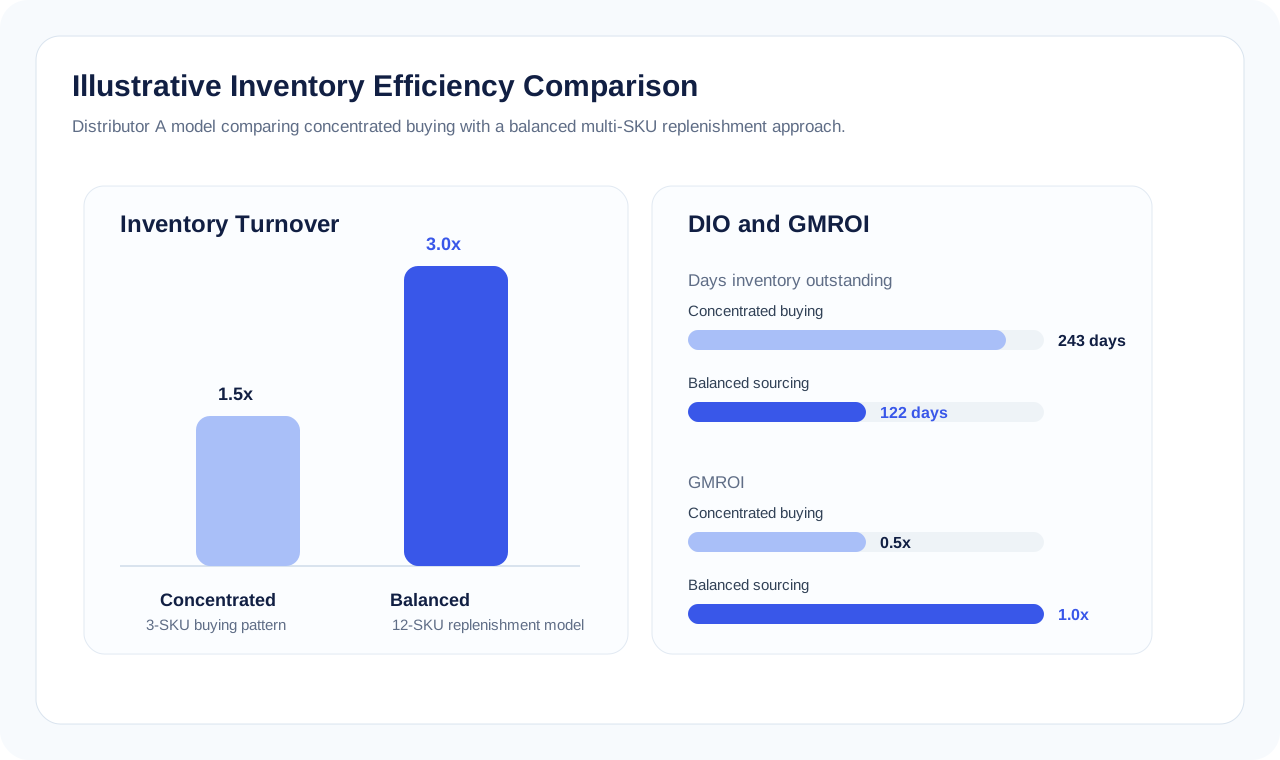
This model is illustrative by design, but it makes the inventory logic clear. When the buyer replenishes a healthier SKU mix rather than overloading a few lines for shipping convenience, turnover improves, DIO shortens, and the same inventory budget becomes more productive.
For a distributor, this is often the difference between a shipment that merely arrives and a shipment that converts into cleaner stock rotation and faster follow-up ordering.
To make that more concrete, think about a buyer serving independent workshops and fleet maintenance customers in one regional market. The buyer may need brake linings, brake chambers, leaf spring items, hub-related parts, and a smaller quantity of supporting SKUs in the same ordering cycle. Demand is real across the assortment, but no single supplier range is large enough on its own to justify a well-loaded container. If the buyer purchases only to make one factory shipment look efficient, stock quickly becomes too deep in a few lines and too thin in others. If the same budget is allocated across a balanced multi-SKU container, the result is usually better freight utilization, broader sales coverage, and a cleaner path to the next reorder.
Coordination Flow Behind the Model
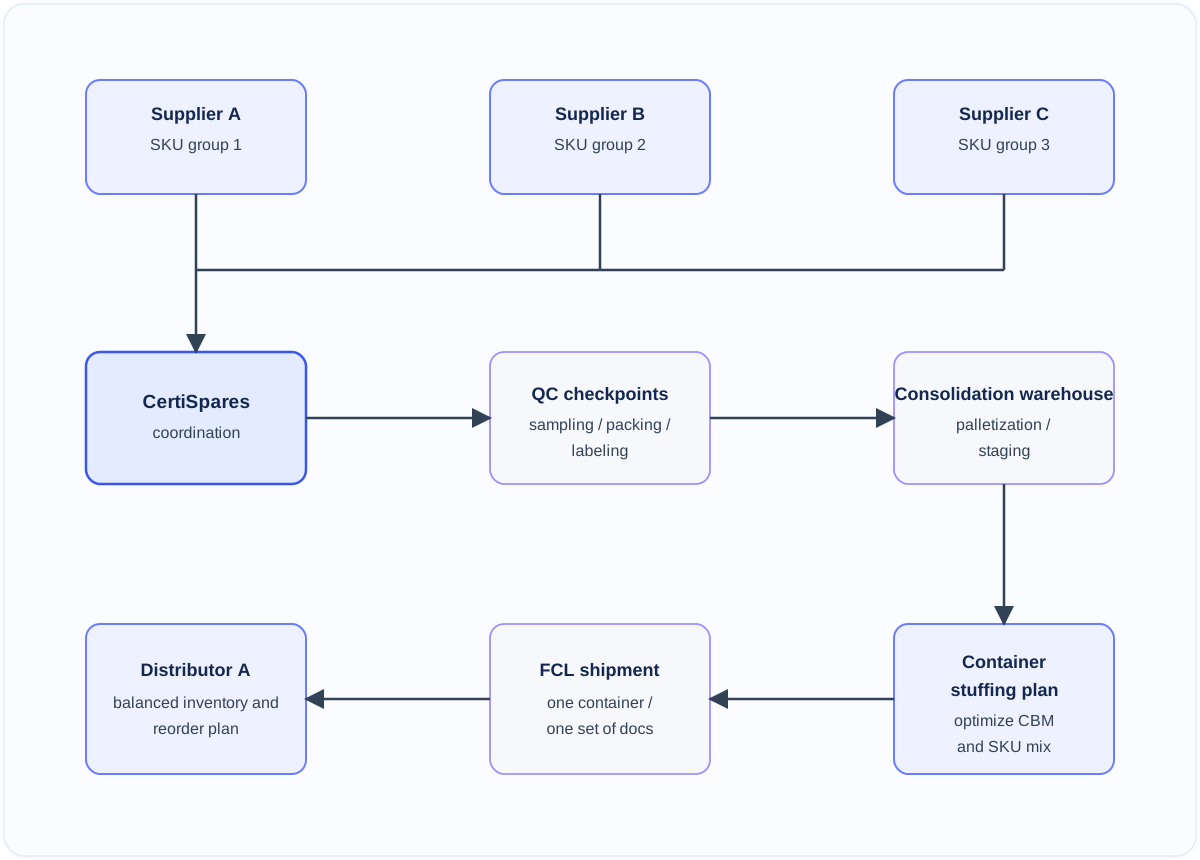
The sourcing advantage is not only in the freight math or the inventory math. It also depends on whether multiple supplier shipments can actually be coordinated into one controlled process: supplier alignment, QC checkpoints, warehouse staging, container planning, and one shipment structure that supports a healthier reorder plan.
The Traditional Problem: Buying to Fill a Container
Container economics matter in international sourcing, especially when ocean shipping, inland delivery, customs handling, and related overhead all affect landed cost. The problem starts when container efficiency becomes the main driver of purchasing volume.
Imagine a buyer who mainly needs a moderate quantity of several part families. If that buyer works with only one supplier in one product line, the order may not be large enough to justify a full-container shipment. At that point, the buyer faces several unattractive choices:
- ship a smaller load and accept weaker freight efficiency
- delay purchasing and risk stock gaps
- increase quantities mainly to make the container economics work
The third option is where the hidden cost appears. Buying additional volume can reduce freight cost per unit in the short term, but if those extra quantities are concentrated in slower-moving SKUs, the buyer may simply be converting logistics pressure into inventory pressure. The container gets filled, but the warehouse becomes less efficient.
For aftermarket businesses, this is not a minor issue. Slow-moving stock affects more than storage space. It affects capital rotation, replenishment planning, and the ability to place the next order at the right time.
Why Vertical Single-Supplier Buying Often Creates Inventory Distortion
Vertical buying is not always wrong. It can make sense when one product family has enough stable demand to support a full, balanced shipment.
The issue is that many buyers do not operate in that pattern consistently. A distributor may have real monthly demand across dozens of part numbers, but not enough demand in any one supplier’s range to build an efficient container without forcing volume into a few lines.
When the sourcing method is too narrow, several distortions become more likely:
- too much capital is placed into one category
- slower SKUs are purchased for shipping reasons rather than sales reasons
- replenishment becomes uneven across the broader assortment
- the next order must be delayed while older stock clears
This is one reason landed cost should not be evaluated only at the SKU quotation level. The real landed cost picture is influenced by how well the order composition matches market demand after the container arrives.
Container Consolidation as a Cost Strategy
Container consolidation is often described in operational terms: combining cargo, managing loading, collecting documents, and coordinating shipment milestones. Those tasks matter, but the business value is bigger than the task list.
When a buyer can combine products from multiple approved suppliers into one container, several commercial advantages become possible:
1. Freight Is Spread Across a More Useful Order Mix
Instead of allocating freight to a narrow order padded for volume, the buyer can allocate freight across the SKUs actually needed for sales and service demand.
That can improve effective landed cost at the order level because the shipment is carrying a broader working inventory position rather than excess stock in one or two lines.
2. Buyers Are Less Dependent on One Factory’s Range
One supplier may be strong in brake components, another in suspension parts, and another in selected wheel-end or chassis items. Consolidation allows the buyer to build a commercially stronger basket across those strengths without treating each supplier shipment as an isolated freight event.
3. Logistics Efficiency Stops Competing with Purchasing Logic
Without consolidation, buyers often have to choose between efficient shipping and sensible SKU planning. With consolidation, those two goals can support each other more effectively.
This is why consolidation should be viewed as a landed-cost strategy rather than simple warehouse coordination.
For buyers evaluating whether this can be handled operationally, see our overview of truck parts quality control and sourcing support.
Balanced Multi-SKU Sourcing as an Inventory Strategy
The second advantage is just as important: balanced sourcing improves inventory turnover. A buyer that sources across multiple required SKUs can build a container around actual assortment needs instead of artificial volume concentration.
Better Alignment with Real Demand
Fast-moving items, medium-moving supporting SKUs, and selected slower lines can be ordered in proportions that reflect actual sales patterns more closely.
Less Slow-Moving Overstock
When buyers are no longer forced to add volume simply to make a shipment work, they reduce the risk of carrying stock that sits too long. That protects capital efficiency and reduces the chance that future purchasing decisions are constrained by old inventory.
Cleaner Reorder Logic
Balanced inventory tends to generate clearer reorder signals. Buyers can see which lines are truly moving, which need topping up, and which should be kept lighter. This improves planning discipline over time and supports more stable purchasing cycles.
The Link Between Inventory Turnover and Cash-Flow Efficiency
Inventory turnover is more than a warehouse metric. It is a cash-flow metric. When too much money is tied up in slow-moving parts, the buyer loses flexibility. Even if the market is demanding other SKUs, available capital may already be sitting in stock that was purchased mainly to satisfy container math.
By contrast, when the container is built around a broader but more practical mix, the same purchasing budget can often support:
- better sales coverage across the assortment
- faster recovery of cash through stronger stock movement
- more room for follow-up orders on proven lines
- less pressure to discount overbought items
This is why experienced buyers increasingly look beyond unit price and ask broader questions:
- How is the container being structured?
- Are we buying what the market needs, or what freight economics are forcing us to buy?
- Does this shipment improve the inventory position, or only move cargo?
Those are supply-chain questions, not merely purchasing questions.
They are also supplier-management questions. If the supplier mix is weak or the quotation structure is unclear, buyers should review how to compare auto parts quotations from Chinese suppliers and how to identify reliable auto parts suppliers in China before finalizing the shipment plan.
Why This Model Supports Repeat Orders
Repeat business becomes stronger when three conditions work together:
- quality is stable
- supply execution is consistent
- the buyer’s inventory structure remains healthy enough to reorder on time
The third condition is often underrated. Even if product quality is acceptable, repeat ordering becomes harder when the previous shipment leaves the buyer with too much slow stock. The problem is often in the order design.
Balanced sourcing improves the odds of repeat orders because the shipment is more likely to convert into usable sales and replenishment demand. When buyers receive a better SKU mix, capital returns more cleanly and reorder timing becomes more rational.
That creates a stronger long-term cycle for both sides:
- the buyer gets better stock rotation and purchasing flexibility
- the supply side receives more sustainable repeat demand
This is one reason CertiSpares positions itself as a sourcing and supply-chain coordination partner rather than as a generic intermediary. The value lies in helping buyers structure procurement in a way that performs better after arrival.
What Buyers Should Evaluate in Their Own Sourcing Model
For distributors, importers, and aftermarket buying teams, a useful review usually starts with a few practical questions:
How Often Do We Increase Quantities Mainly for Shipping Efficiency?
If the answer is “often,” there may be hidden inventory costs inside the current sourcing model.
Are We Overweight in a Few Lines After Each Shipment?
If containers repeatedly arrive with a narrow SKU concentration, the business may be sacrificing inventory health for freight convenience.
Could the Same Budget Support a Better Order Mix?
This is the key question. If multiple required SKUs can be sourced across multiple suppliers and loaded into one container, the same spend may produce a stronger commercial result.
Do We Have Enough Coordination Control to Make Consolidation Practical?
Consolidation only works when supplier comparison, QC checkpoints, packaging control, document accuracy, and shipment follow-up are handled in a disciplined way.
Related Product Sourcing Paths
Container consolidation works best when the buyer separates cargo by real part systems. Common starting points include brake system parts, suspension parts, axle and wheel-end parts, and rubber and bushing parts.
A consolidation RFQ should show SKU list, supplier source, carton data, gross weight, destination, packing rule, and inspection timing. If the RFQ does not separate those inputs, container planning becomes guesswork.
FAQ
Is container consolidation only useful for large buyers?
No. It can also help smaller importers when several needed SKUs can be grouped into one shipment without overstocking slow-moving parts. The RFQ should still define the mixed SKU scope clearly.
What is the biggest risk in consolidation?
The main risk is weak coordination: mixed labels, unclear supplier timing, poor packing, or a parts mix that improves freight cost but hurts inventory turnover. A stronger RFQ reduces that coordination gap.
Should all parts come from one supplier?
Not always. One supplier may be efficient, but multi-supplier consolidation can work better when categories require different specialist sources.
Conclusion
For commercial vehicle parts buyers, the smartest sourcing model is not always the one that goes deepest with one supplier at a time.
In many cases, the stronger model is the one that lets buyers combine multiple needed SKUs from multiple suppliers into one container, reduce logistics cost, and protect inventory turnover at the same time.
That is the real commercial advantage of container consolidation and balanced multi-SKU sourcing:
- lower landed cost
- better inventory structure
- faster stock turnover
- stronger cash-flow efficiency
- higher probability of repeat orders
When quality is controlled and supply execution is stable, this approach turns sourcing into a more effective business system instead of a sequence of disconnected purchase orders.
For buying teams, the practical question is no longer whether consolidation is operationally possible. The more important question is whether the next container is being built in a way that improves freight efficiency and leaves the business in a stronger inventory position after arrival.
If your team is reviewing how to lower shipping cost without overstocking slow-moving items, contact CertiSpares. We can review your current order structure, identify where supplier mix or SKU mix is working against turnover, and help map a consolidation plan that supports both freight efficiency and healthier repeat ordering through our truck parts sourcing service.